30 | 06 | 2026
148th anniversary of Franjo Hanamans’s birth and 120 years of his inventing the modern tungsten filament light bulb
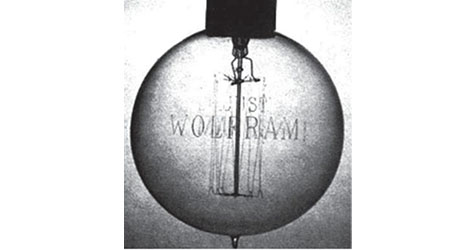
In the year in which we celebrate the 35th anniversary of SIPO, we remember the Croatian inventor Franjo Hanaman, whose invention left an indelible mark on the development of electric lighting.
Franjo Hanaman was born in 1878, in Drenovci near Županja. During his education, he developed a special interest in chemistry, which he studied at the Technical University in Vienna. From 1900, he led the electroanalytical laboratory in Vienna, which encouraged him to pursue electrical engineering and, in collaboration with physicist Aleksandar Just, began research into finding a process for obtaining more durable solutions for filaments used as a source of lighting in light bulbs.
From 1903 to 1912, Hanaman and Just developed and patented a process for producing tungsten filaments and improving them. The above-mentioned patented invention was the basis for the emergence of a new innovation on the market – tungsten filament light bulbs. Their patent was registered in 13 countries around the world, and was purchased by a company from Budapest, which began producing tungsten filament bulbs in 1906.
Thus, thanks to the tungsten filament, a light bulb was created that was brighter and more durable than previous versions and provided lighting closest to that provided by daylight.
The patent was sold to the American company General Electric Co. in 1910, and Hanaman used part of the funds he received from the sale of his patent to develop new technical solutions. Patent protection of an invention is extremely important, because in this way the inventor receives temporary exclusive rights to use the protected invention and thus the opportunity to economically exploit the results of his work; knowledge about the patented invention as a technical solution is publicly available throughout the world and represents the basis for the development of new inventions and the encouragement of technological progress in society.
With a series of minor improvements, the use of tungsten filament bulbs lasted until 2009, when their production and use ceased in most parts of the world. Although they represented a huge technological advance over previous lighting solutions, they produced more heat (95% of energy) than light (5% of energy) and had a relatively short lifespan compared to today's more modern lighting solutions. Today, more advanced and economical lighting products such as LED lighting fixtures and fluorescent and compact fluorescent light bulbs (CFLs) - energy-saving light bulbs - are in use, which is also a result of European Union regulations encouraging consumers to use more energy-efficient lighting.
❓Can you imagine everyday life without electric lighting as known today?
#SIPO35 #intellectualproperty #innovations #patents #science #IP